

#BLOG · 27 August 2026
What questions to ask at the first visit to the dentist, to know that you are in good hands?
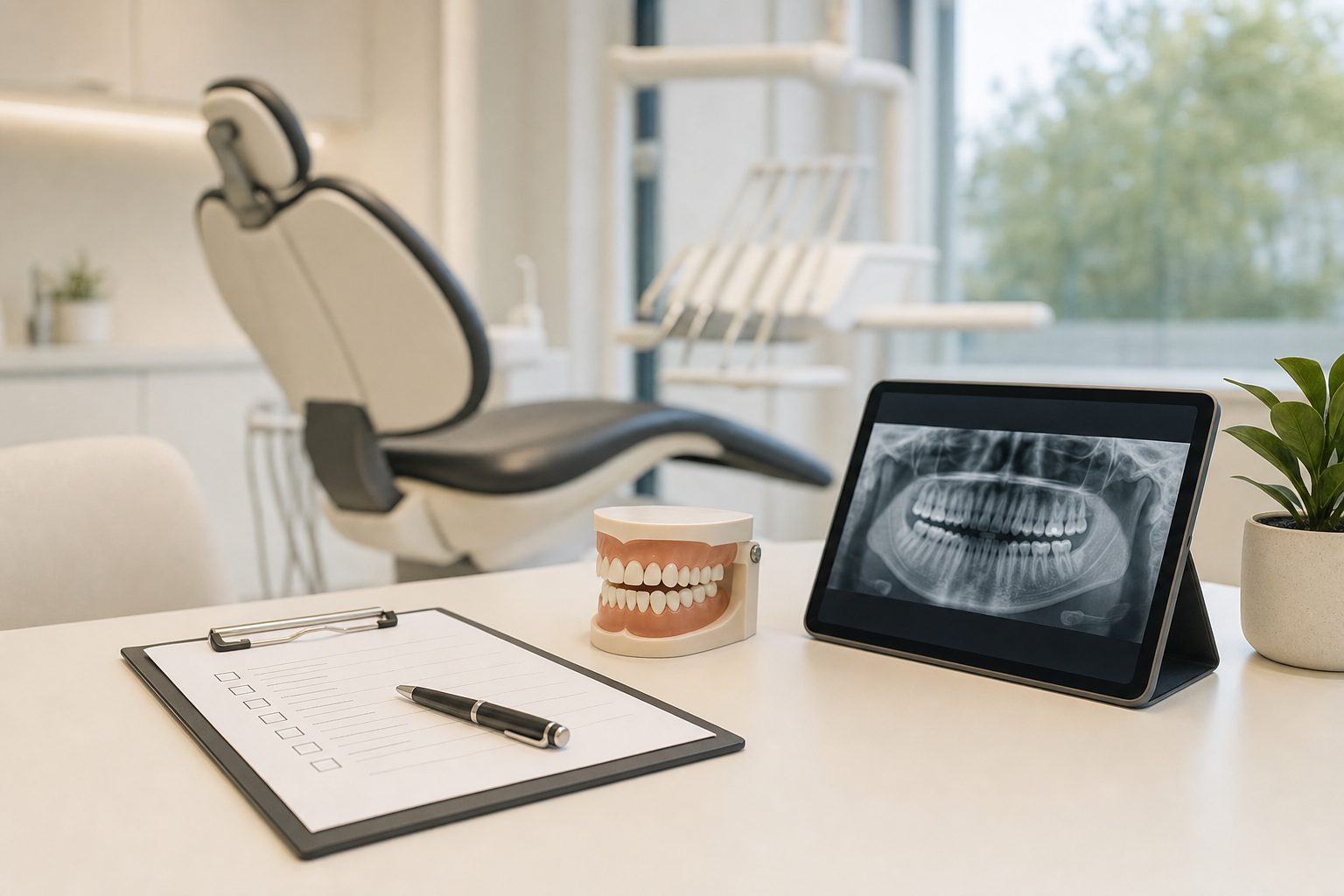
Why do the questions you ask at the first consultation matter?
On your first visit to a dental practice in Sector 6, it is worth asking questions about four essential things: how the instruments are sterilized, what the treatment plan looks like and what investigations it is based on, how the costs are structured and how the clinic manages emergencies between appointments. Clear answers, given without hesitation, are the best indicator that you've found a medical team you can trust. A serious office never feels bothered by the patient's questions, on the contrary, it encourages them.
In our clinic, we frequently see patients who have put off seeing a dentist for years because they didn't know how to evaluate an office and were afraid they would be pressured into accepting treatments they didn't understand. The first consultation is exactly the right time to clarify everything: you have not yet committed to any treatment, and the way the doctor answers you says a lot about how the collaboration will go.
We have structured a practical checklist below, by category, with the questions we recommend to our patients. You don't have to put them all. Choose the ones that are relevant to your situation and notice not only what is answered, but also how.
Questions about hygiene, sterilization and your safety
Patient safety starts with the sterilization circuit, a topic that any properly organized dental office talks about openly. Here's what you can ask:
- How do you sterilize the instruments? The answer should include autoclaving (a device that sterilizes with steam under pressure) and individual packaging of instruments in sealed bags, opened in front of the patient.
- Do you use disposable instruments where possible? Needles, saliva aspirators, cups and bibs must be single-use.
- How do you check the sterilization efficiency? Rigorous offices use periodic tests that confirm that the autoclave is working properly.
A good sign is also what you notice yourself: clean surfaces, the doctor and the nurse changing gloves between patients, instruments removed from the sealed package in front of you. If the answers are vague or the topic seems awkward, it's a legitimate red flag.
What amenities are worth asking if there are?
The equipment does not replace the doctor's experience, but it shows how much the clinic invests in correct diagnosis and treatment. You can ask if there is digital radiology in the clinic (low-dose x-rays, available on site), intraoral scanner for fingerprints instead of classic paste impressions, and modern treatment technologies. For example, in the case of gum disease, laser-assisted periodontology allows more comfortable and precise tissue treatment. The presence of these features tells you that you will not be sent between several locations for basic investigations.
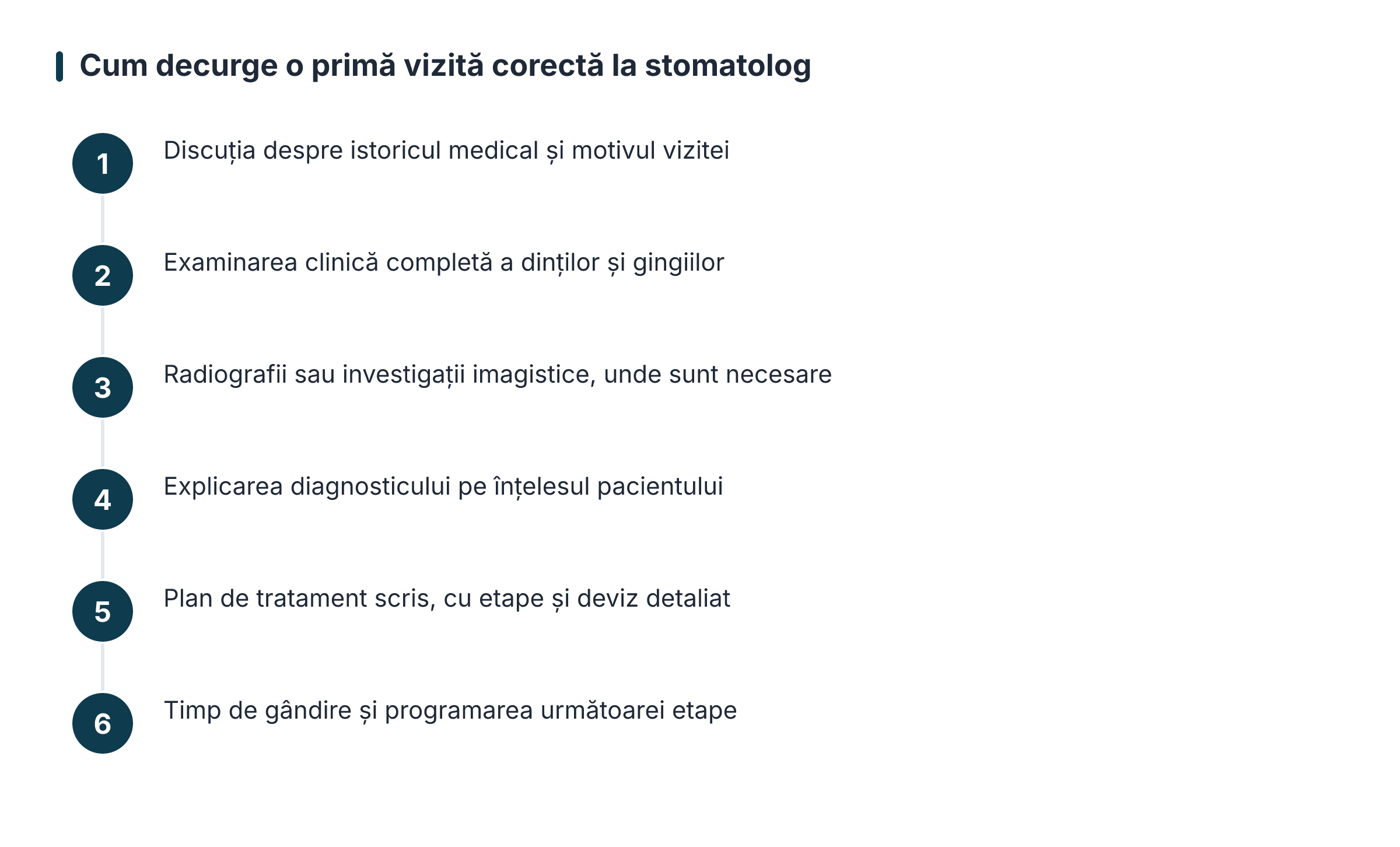
Questions about consultation, diagnosis and treatment plan
The first visit to the dentist should first and foremost be a full evaluation, not a sale. Questions in this category help you understand how the doctor thinks:
- What does the first consultation include? A proper consultation involves a complete clinical examination, discussion of your medical history and, where appropriate, x-rays for an accurate diagnosis.
- Can you explain the treatment plan to me step by step? You have the right to understand what the problem is, why each treatment is recommended, and in what order the steps are done.
- Are there more treatment options for my condition? For most problems there are alternatives, with different advantages, limits and costs. A transparent doctor presents them all to you, not just one.
- What happens if I delay treatment? The answer helps you prioritize correctly, without pressure.
At Dental Science, for example, patients who come in for teeth alignment problems are given explanations about all orthodontic options, including invisible braces with aligners, so that the final decision is an informed one, suited to everyone's lifestyle and budget.
How do you know the treatment plan is serious?
A well-made treatment plan is written, step-by-step, and accompanied by explanations you understand. It includes the order of the interventions, the estimated duration and the costs related to each stage. If you only receive a lump sum without details, or if extensive treatments are recommended without imaging investigations, ask for clarification. For complex treatments, such as dental implants or whole tooth restorations, it is normal and healthy to ask for time to think or even a second opinion. A doctor confident in his recommendation will not feel offended.
Questions about costs and payment methods
Money is a touchy subject, but that's exactly why it needs to be discussed openly from the start. We encourage our patients to ask these questions without embarrassment:
- How much does the initial consultation cost and what is included in the price? Check if x-rays are included or paid for separately.
- Do I receive a written estimate before treatment begins? The written estimate protects you from surprises and allows you to compare correctly.
- What if there are additional costs along the way? Sometimes the clinical situation turns out to be more complex than it initially seemed. It is important that any cost changes are communicated and explained to you beforehand, not at the end.
An important point: the very low price is not automatically an advantage, because it can hide poor quality materials or skipped stages, and the high price is not, in itself, a proof of quality. What really matters is transparency: knowing exactly what you're paying, for what and at what stage.
Questions about emergencies, appointments and continuity of care
The relationship with a dental office does not end after the last treatment session. Ask from the start how things work out in the long run:
- What do I do if I have an emergency between appointments? An acute pain or detached work does not wait. Find out if there is a dedicated contact number and how quickly you can be reached.
- Will I be treated by the same doctor at each visit? Continuity matters, especially in long-term treatments. A multi-specialist model is also fine, as long as there is a coordinating physician who knows your case.
- What specialists are there in the team? A clinic with an orthodontist, surgeon, periodontist and prosthetist under the same roof saves you traveling and ensures better communication between doctors.
- At what interval do you recommend periodic checks? The standard answer is 6 months, adjusted according to your situation.
For patients in Militari and the rest of Sector 6, accessibility matters just as much: a practice close to home or office makes it much more likely that you will comply with periodic checkups. You can see the full range of dental treatments available in Sector 6 to get an idea of what a full general dental clinic should cover.
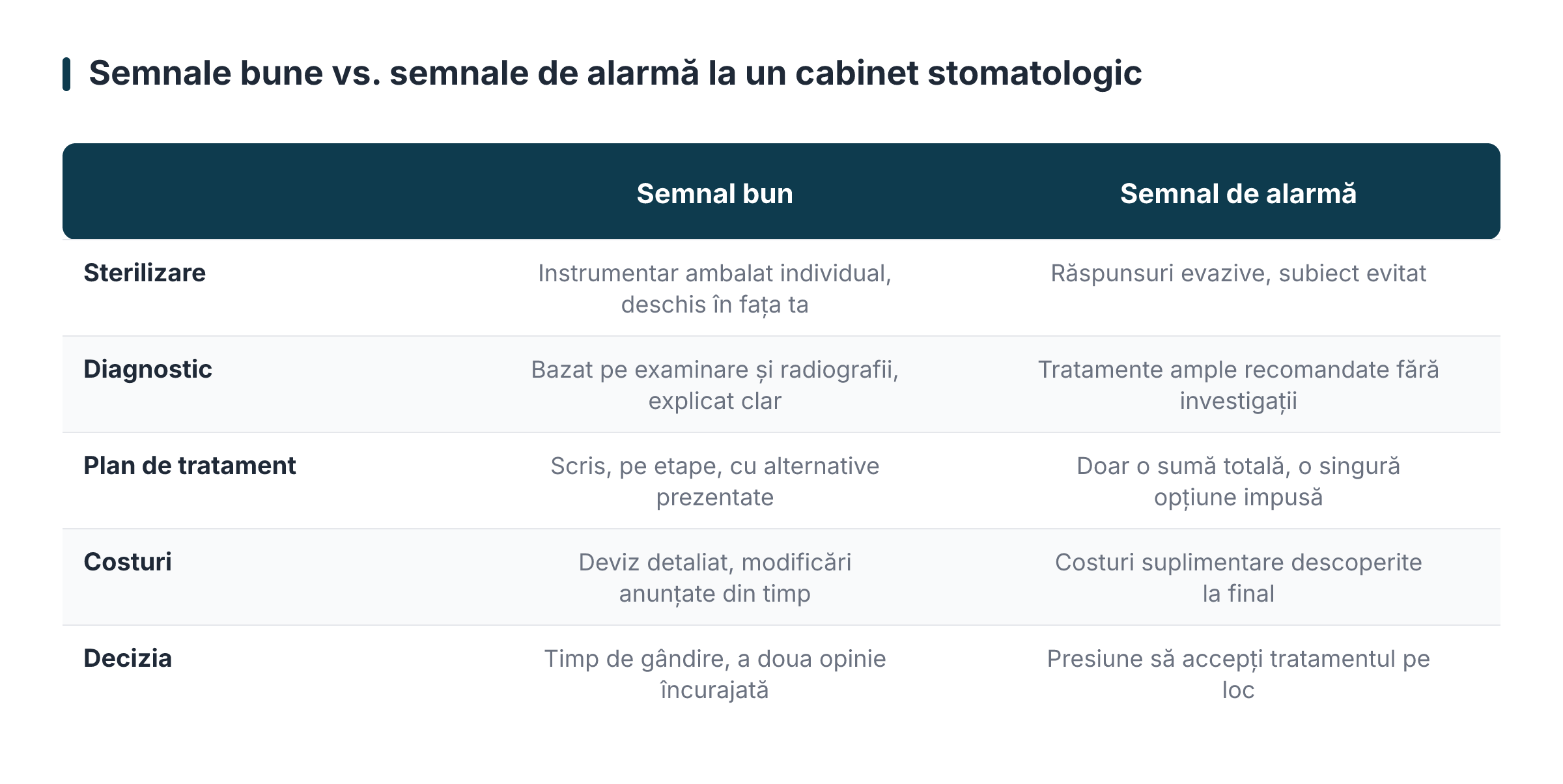
Good signals and red flags: how do you interpret the answers?
Beyond the list of questions, the way you are answered matters. From our experience with patients who have gone through several practices before coming to us, these are helpful pointers.
Good signs:
- The doctor explains the diagnosis in your understanding, possibly showing you X-rays or intraoral images.
- You receive a written treatment plan and estimate, with clear steps.
- You are presented with alternatives, not a single imposed option.
- No one is pressuring you to decide on the spot for expensive treatments.
- Staff are open to questions about sterilization and facilities.
Alarm signals:
- Extensive treatment recommendations without x-rays or investigations.
- Elusive answers to questions about costs.
- Bid pressure valid today only for medical decisions.
- Refusal to give you your treatment plan in writing so you can ask for a second opinion.
The conclusion is simple: a good dentist in Sector 6 or anywhere else is recognized by transparency, patience and willingness to answer any question. The first consultation is the perfect test. Come prepared with a list of questions, and if the answers leave you in doubt, seek a second opinion before starting treatment.
Frequently Asked Questions
What should the first dental consultation include?
A comprehensive first consultation includes discussion of your medical and dental history, clinical examination of the teeth, gums and oral mucosa, as well as x-rays where necessary for an accurate diagnosis. At the end you should receive clear explanations of the identified problems and a treatment plan with stages and costs. If you have an acute problem, the priority is to resolve the pain, and the full assessment is done immediately afterwards.
Is it rude to ask about sterilization at the dental office?
Not at all. Sterilization is a medical safety issue, and any properly organized practice openly answers such questions. In our practice, we appreciate patients who ask, because they show involvement in their own health. Good signs are instruments individually wrapped and opened in front of you, disposable materials, and the willingness of staff to explain procedures. If the question creates visible discomfort, this is a good reason for caution.
Do I have to accept the treatment plan on the spot?
Not. You have every right to ask for the treatment plan and estimate in writing, to think at home and, for complex treatments, to ask for a second opinion from another doctor. The exception is emergencies, such as an acute infection, where delaying may make the situation worse, and the doctor will explain why rapid intervention is needed. For everything else, an informed decision made without pressure is always the best decision.
How do I know if the asking price is correct?
The price of a dental treatment depends on the complexity of the case, the materials used, the technology in the clinic and the experience of the medical team. That's why the correct comparison between clinics is done on written quotes, which detail exactly what each stage includes. A very low price may mean inferior materials or omitted steps, and a high price is not automatically synonymous with quality. Always ask for a detailed estimate and make it clear from the start how any additional costs will be handled.
What do I do if I have a dental emergency between appointments?
Ask from the first visit what the emergency clinic's procedure is: if there is a dedicated phone number, how quickly you can be seen and what happens outside of hours. A well-organized clinic has a clear protocol for acute pain, trauma, or loose work and can give you phone referrals until you get to the office. It is an important evaluation criterion, because emergencies rarely occur at convenient times.
Is it worth asking about teeth straightening options at the first visit?
Yes, especially if aligning your teeth bothers you aesthetically or functionally. An orthodontic consultation evaluates the position of the teeth and the bite and shows you the available options, from classic fixed appliances to invisible aligners, which are transparent removable mouthpieces. Each variant has different indications, duration and costs, and the right choice depends on your specific case. The first visit question helps you find out if the clinic has an orthodontist on the team and what such treatment would look like for you.
This article is informative and does not replace professional advice. For a personalized diagnosis and treatment plan, schedule a consultation.