

#BLOG · 23 July 2026
Can teeth whitening be done after braces or during orthodontic treatment?
The short answer: yes, but timing matters
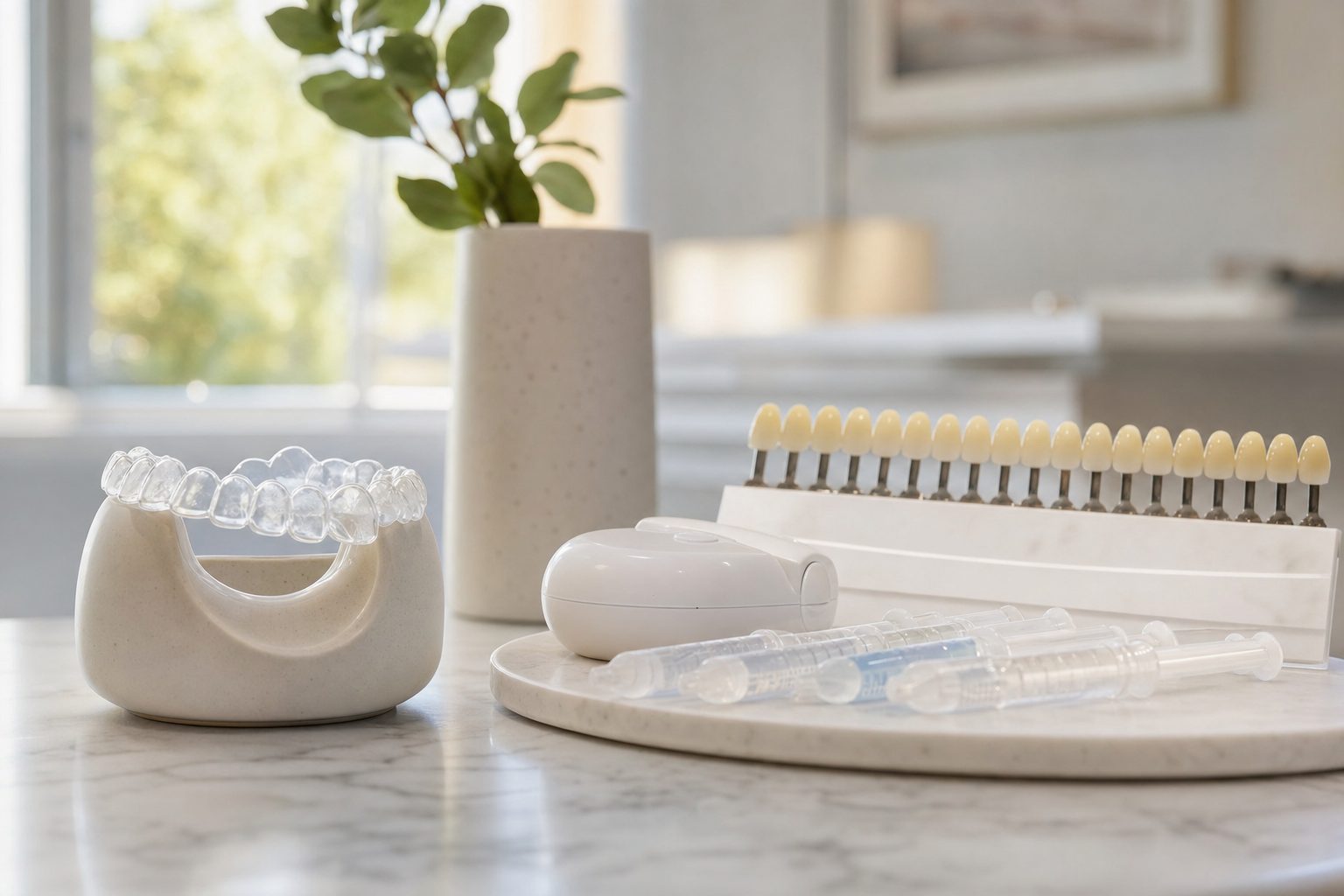
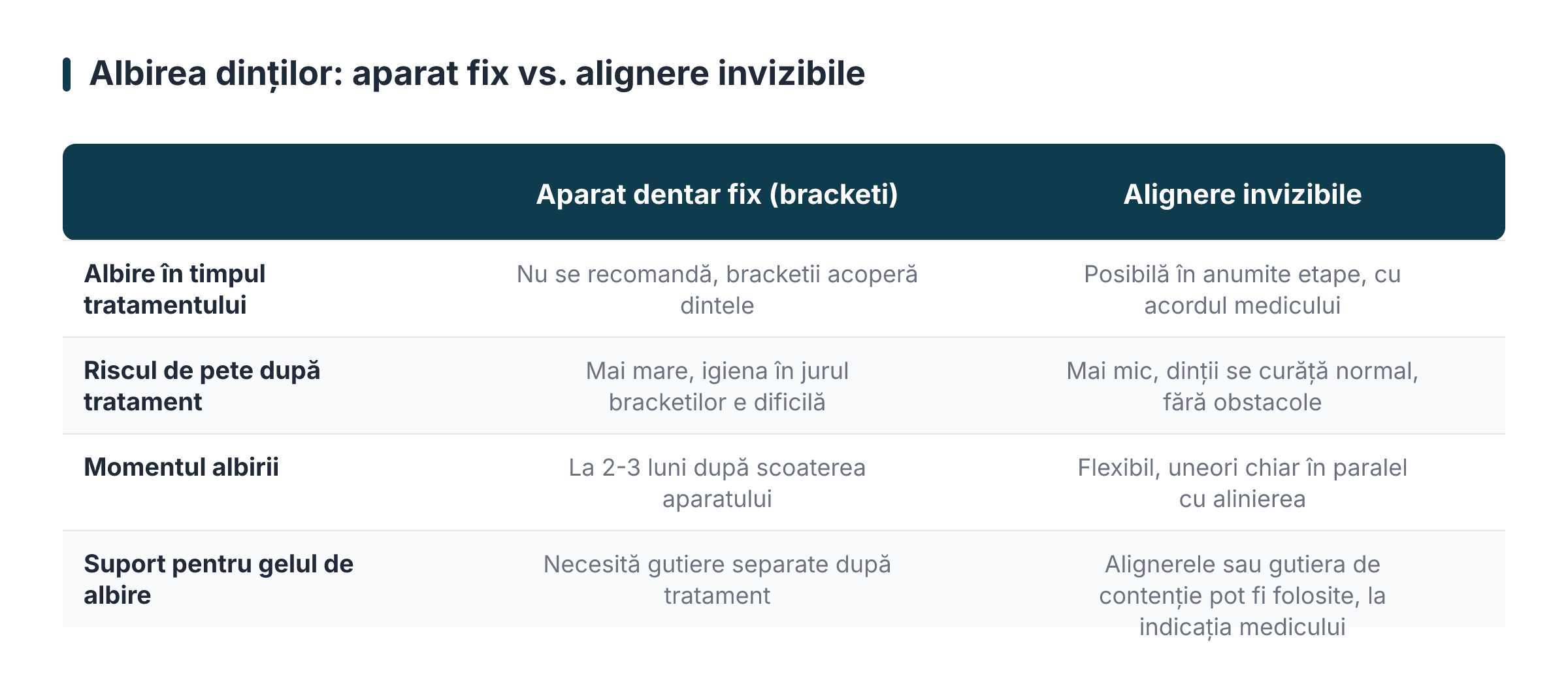
Yes, teeth whitening after braces can be done safely, but we recommend that you usually wait two to four weeks after removing the brackets, during which time the enamel rehydrates, the gums calm down and a full professional cleaning is performed. During treatment with fixed braces, whitening is not recommended, because the brackets cover part of the tooth surface and the result would be uneven. The important exception is invisible aligners, which are removed from the mouth and allow, in certain situations, whitening even in parallel with the alignment of the teeth, under the supervision of the orthodontist.
In our clinic in Bucharest, this question comes up very often, especially in the summer, when patients want a bright smile before the holidays and have just finished or are about to finish an orthodontic treatment. The good news is that the two treatments naturally complement each other: orthodontics aligns the teeth, and professional whitening restores their shine. The important thing is just to respect the order and the right time.
Why is whitening not done with braces fixed on the teeth?
The fixed dental appliance, with metal or ceramic brackets, is glued directly to the surface of the teeth. The whitening gel cannot penetrate under the bracket, so the covered area retains its original color. At the end of the treatment, you would be left with a small, darker square in the middle of each tooth, exactly the opposite of the desired effect.
There is also a second reason, less known to patients. During orthodontic treatment, the teeth are in motion and the ligaments that support them are slightly stressed. Some patients already have increased sensitivity during this period, and whitening agents, which can temporarily increase tooth sensitivity, would only add unnecessary discomfort.
That's why, for patients with fixed braces, the right plan is simple: first we complete the alignment, then we schedule professional whitening. The final aesthetic result is thus uniform and predictable.
What is different about invisible aligners?
A invisible dental appliance with aligners it is not glued to the teeth, but is worn as removable transparent mouthguards. This means that the surface of the teeth remains completely free, and whitening can be discussed even during the treatment, if the doctor considers that the situation allows it. Some patients use, at our recommendation, whitening gels with controlled concentration right in their mouths, at the right stages of the treatment.
It is one of the reasons why many adults in Bucharest choose aligners: aesthetic flexibility. Not only is the device discreet, but it also does not block other cosmetic treatments along the way. However, the decision remains a medical one, taken together with the orthodontist, depending on the sensitivity of the teeth and the stage of treatment.
Stains on teeth after braces: why do they appear and what do we do with them?
Many people notice, after removing the fixed appliance, small color differences on the teeth: whitish contours around the place where the brackets were or slightly yellowish areas. It is a common situation and, in most cases, solvable. The main causes are:
- Difficult hygiene during treatment: bacterial plaque accumulates more easily around brackets, and hard-to-reach areas can become stained over time from coffee, tea, red wine or colored carbonated drinks.
- White spots of demineralization: areas where the enamel has lost minerals, visible as chalky white spots around the former bracket. These are not solved by classic bleaching, but by remineralization, infiltration or other specific treatments.
- Adhesive residues: after removing the brackets, the small traces of adhesive material are removed and the surface of the tooth is polished, otherwise they retain stains.
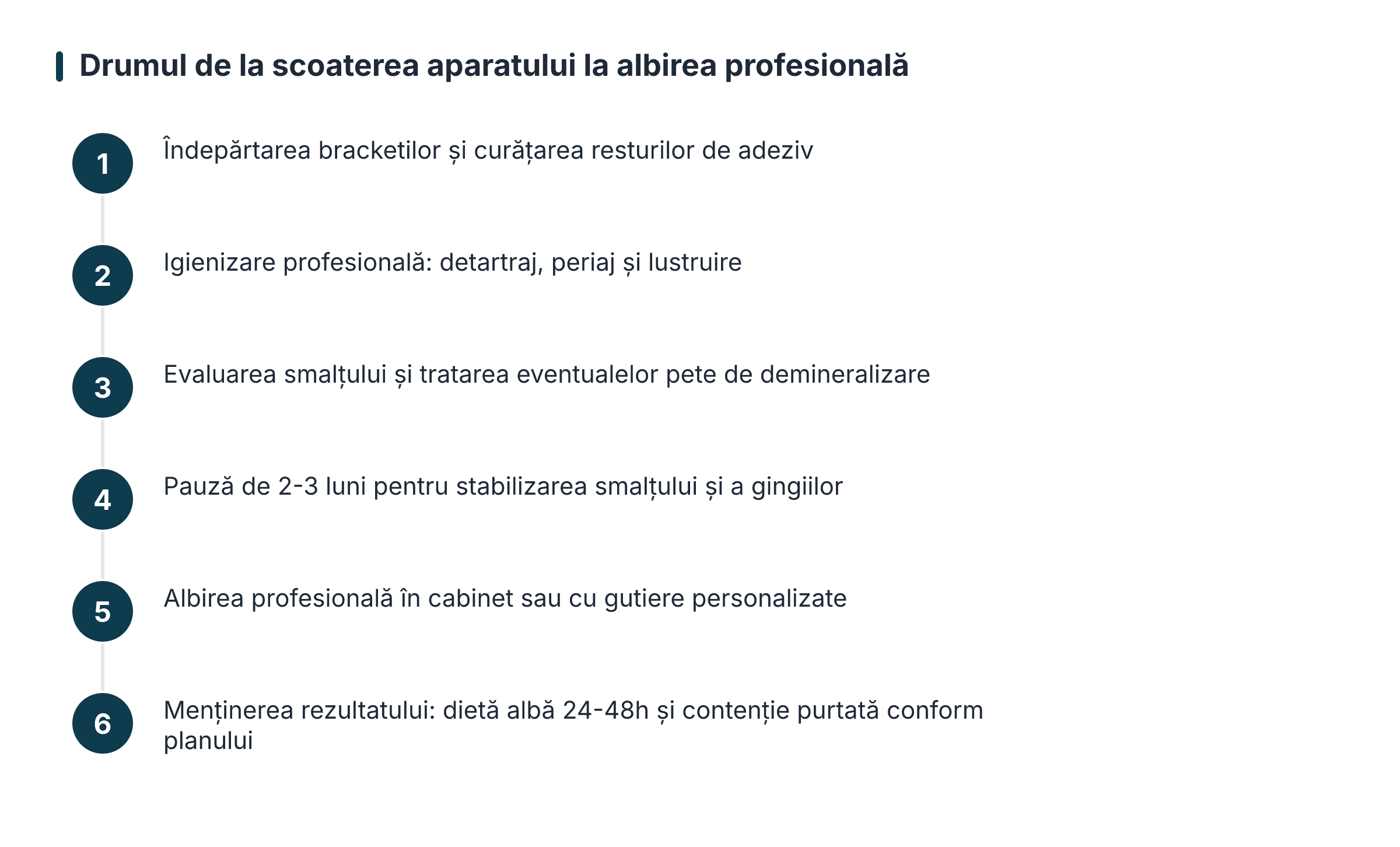
That's why the first step after any fixed orthodontic treatment is not whitening, but a careful evaluation and professional hygiene: scaling, professional brushing and polishing. Often times, this step alone visibly improves the color of your teeth. Only then do we determine if and when actual professional whitening is indicated.
An important point: if there are white spots of demineralization, whitening done too early can make them stand out even more, because it whitens the surrounding enamel, but does not even out the affected area. Here the doctor's experience makes the difference in choosing the right treatment.
How long after removing the braces can whitening be done?
As a general rule, we recommend that our patients wait between two and four weeks after removing the fixed appliance. This period has several concrete roles:
- Enamel rehydration and stabilization: after cleaning the adhesive and polishing, the tooth surface needs a little time to rebalance.
- Soothe gums: the gums may be slightly inflamed after the period with brackets; whitening on an irritated gum is unnecessarily uncomfortable.
- Complete sanitation: professional descaling and brushing are done before whitening, so that the gel acts evenly on a clean enamel.
- Evaluation of stains: we check if there are demineralizations that require separate treatment before bleaching.
A practical detail that many patients forget: after the fixed appliance comes the containment stage, with a fixed retainer or mouth guard. Bleaching can be done without problems during this period, and if you wear a retainer, it can sometimes even be used as a support for the whitening gel at home, as directed by the doctor. All details about dental treatments available in our clinic, including professional whitening, you can discuss them at your assessment consultation.
Teeth whitening in the summer: what to pay attention to in the hot season?
Summer is the season when the demand for whitening increases noticeably: holidays, events, photos, but also more colored drinks that leave marks on the teeth, from cold coffee with syrup to rosé wine and intensely pigmented cocktails. Teeth whitening in the summer is perfectly possible, with a few common sense precautions:
- Plan your bleaching at least one to two weeks before your vacation, so that the possible temporary sensitivity passes and you can follow the rules of the first days.
- Follow the "white diet" immediately after bleaching: in the first 24 to 48 hours, the enamel is more receptive to pigments, so avoid coffee, red wine, berries, colored juices and smoking.
- Hydrate with water, not just fizzy drinks: frequent acidity from juices and cocktails can accentuate sensitivity after bleaching.
- Do not combine professional bleaching with "beach" products bought online: unsupervised strips and gels applied over recent bleaching increase the risk of sensitivity and uneven results.
For patients finishing orthodontic treatment in the early part of the summer, the schedule usually fits very well: braces removal, cleaning, then professional whitening, all before vacation. If you wear aligners, talk to your orthodontist about whether whitening can be integrated right into your summer plan without breaks.
Professional whitening or home products: what do we recommend after orthodontics?
After orthodontic treatment, teeth and gums deserve a careful approach, not experiments. Professional whitening, carried out in the office or with customized mouthpieces under the doctor's supervision, has several clear advantages over generic products: the concentration of the gel is adapted to your situation, the gums are protected, and possible demineralization spots are identified and treated correctly, not accentuated.
Commercial products, such as whitening pastes or whitening strips, have low concentrations and limited results, and applied to enamel recently released from brackets, without evaluation, may give stained results or sensitivity. They are not necessarily dangerous, but after two years of wearing braces, it would be a shame to leave the last stage, the aesthetic one, to chance.
Our recommendation for patients who want teeth whitening after orthodontics is simple: come in for an evaluation consultation. We check the condition of the enamel and gums, do the hygiene, discuss the desired shade and choose the right method together. Thus, the smile aligned with so much patience also receives the shine it deserves.
Frequently Asked Questions
Can I have teeth whitening while wearing fixed braces?
We do not recommend whitening during braces treatment. The brackets are glued to the teeth and cover part of the enamel surface, so the whitening gel does not reach the tooth evenly. In the end, areas of different colors would remain exactly in the middle of the teeth. In addition, teeth undergoing orthodontic movement may be more sensitive, and whitening would accentuate this discomfort. The correct solution is to complete the alignment, have it professionally cleaned and then bleached a few weeks after the appliance is removed.
But if I wear invisible aligners, can I whiten my teeth at the same time?
In many cases, yes. Aligners are removable braces, so the surface of the teeth remains free, and whitening can be done even during the treatment, with the consent and under the supervision of the orthodontist. Sometimes the controlled-concentration whitening gel can be applied right into the aligners you're already wearing, at the right stages. The decision depends on the sensitivity of the teeth, the condition of the gums and the stage of treatment, so discuss this plan with your doctor before using any whitening product.
How long do I have to wait after removing the brackets for whitening?
As a rule, we recommend a break of two to four weeks after the removal of the fixed appliance. In this interval, the enamel rebalances after cleaning the adhesive, the gums calm down, and we carry out the professional scaling and brushing, which are mandatory before whitening. We are also now evaluating whether there are white spots of demineralization that need separate treatment. The exact interval is determined individually, at the consultation, depending on the condition of your teeth and gums.
I have white spots on my teeth after braces. Does bleaching fix them?
Not always, and this is an important detail. White spots after brackets are usually areas of enamel demineralization, and classic whitening does not even them out. On the contrary, done too soon, it can whiten the surrounding enamel and make the stains even more visible. These areas are treated by remineralization, infiltration or other specific procedures, and whitening is planned later, if it is still necessary. That is why the evaluation by the doctor before whitening is essential after an orthodontic treatment.
Can I do teeth whitening in the summer, before the holidays?
Yes, bleaching can be done in any season, including summer. We recommend that you schedule it at least one to two weeks before going on vacation, so that any temporary sensitivity passes and you can follow the dietary restrictions of the first 24 to 48 hours, when coffee, red wine, colored drinks and smoking must be avoided. So you go on vacation with a bright smile and without worries about care immediately after the procedure.
Does professional bleaching affect the retainer or retainer?
No, bleaching does not affect continence, nor do you need to break it. The fixed retainer, glued to the inside of the teeth, does not interfere with the gel applied to the visible surface of the teeth. If you wear a removable retainer, it can sometimes even be used as a support for the whitening gel at home, as directed by the doctor. It is important to continue wearing the retainer as planned so that the teeth remain aligned exactly where the orthodontic treatment brought them.
This article is informative and does not replace professional advice. For a personalized diagnosis and treatment plan, schedule a consultation.