
#MINIMALLY INVASIVE ORAL SURGERY
Dental surgery in sector 6, Bucharest
Precise interventions, designed for your smile of tomorrow
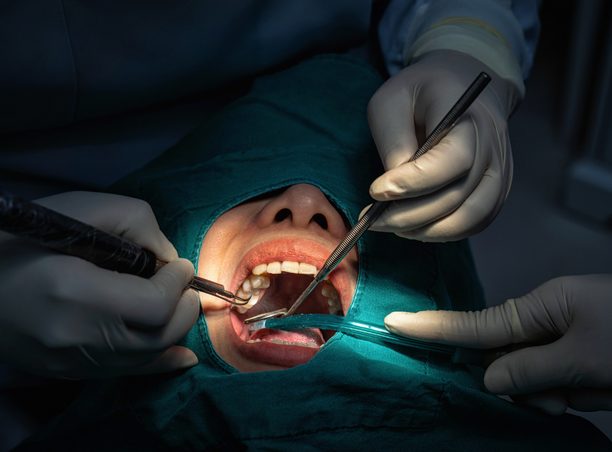
Dental surgery covers interventions that solve problems that ordinary treatments can no longer solve: from simple and complex extractions, at wisdom teeth included, bone addition and sinus lift. At Dental Science, in the Lujer area, sector 6, Bucharest, every surgical intervention is digitally planned and performed minimally invasively, with an emphasis on patient comfort and rapid healing.
Dr. Mihai Ionescu, Dental and Maxillofacial Surgery Specialist, coordinates surgeries at Dental Science. Our approach has an important particularity: every extraction is thought one step ahead. The bone that remains after the extraction is the foundation of any future tooth replacement solution, so we preserve it from the moment of the intervention, instead of rebuilding it with effort later.
What to expect?

Interventions under local anesthesia, without pain during the procedure
CBCT planning before any complex intervention
Atraumatic techniques, which preserve the bone for future solutions
Clear postoperative indications, in writing, and control after the intervention
#what is it
What is dental surgery and why does it matter how an extraction is done?
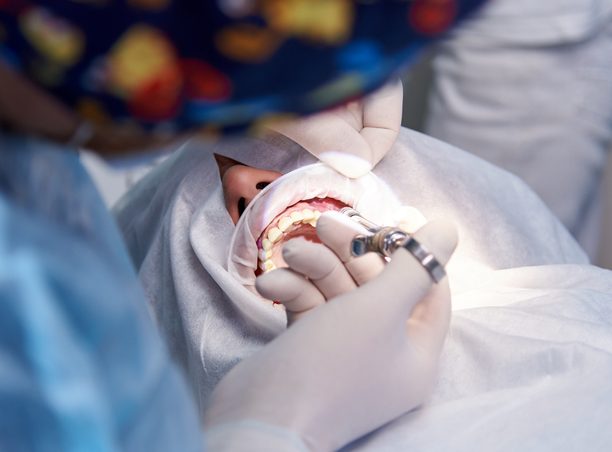
Dental surgery (oral surgery) is the branch of dentistry that surgically treats diseases of the teeth, jawbone and soft tissues of the oral cavity. Include dental extractions, interventions on wisdom teeth, pre-prosthetic surgery, implantology and bone reconstruction procedures which prepare the ground for the replacement of lost teeth. At Dental Science, these interventions are performed by a doctor specializing in dental and maxillofacial surgery.
Few patients know one essential thing: the way an extraction is done decides what options you will have afterwards. In the first year after a regular extraction, the bone in that area resorbs significantly, because it is no longer stimulated by the presence of the tooth. A traumatic extraction, in which the bony walls are fractured, further accelerates this process. The result: when the patient decides to replace the tooth, the bone is no longer sufficient, and its reconstruction costs time and money.
That's why we work with atraumatic extraction techniques: the tooth is removed with instruments that protect the walls of the alveolus, and where indicated, the alveolus is treated with bone preservation procedures (alveolus preservation). For interventions on soft tissues we use the Biolase Epic X laser, which cuts precisely, coagulates instantly and significantly reduces bleeding, inflammation and postoperative discomfort.
Classic mining or mining with a long-term vision? The comparison in brief
Classic extraction: it solves the immediate problem, the compromised tooth goes away, but leaves the healing of the bone to chance. The bone ridge is progressively resorbed, and subsequent tooth replacement may require additional reconstructive procedures.
Atraumatic extraction with bone preservation: protects the walls of the alveolus during the intervention and, where indicated, maintains bone volume by preserving the alveolus. The ground remains set for the chosen replacement solution, with simpler and more predictable future procedures.
In short: an extraction done right today means a simpler, faster and less expensive treatment tomorrow. This is why at Dental Science we discuss the tooth replacement plan before the extraction, not after.


How is surgery performed at Dental Science?
Every surgery at Dental Science follows a clear protocol, from planning to healing, so you know exactly what to expect at each stage. Here are the steps each patient goes through:
1. Consultation and planning on CBCT
It all starts with the clinical examination and X-ray or tomography analysis at our clinic in the Lujer area, sector 6, Bucharest. Dr. Mihai Ionescu evaluates the position of the tooth, the relationship with the anatomical structures (alveolar nerve, maxillary sinus) and the condition of the surrounding bone. No complex intervention is done without this complete three-dimensional image.
2. The treatment plan, discussed before the intervention
We explain exactly what the intervention entails, how long it takes and how the healing proceeds. Essential: If the extracted tooth needs to be replaced, we discuss the options and the full plan before the extraction. You get a detailed estimate, with no surprises later.
3. Anesthesia and minimally invasive intervention
The intervention is performed under local anesthesia, so you do not feel pain during the procedure. Dr. Mihai Ionescu uses atraumatic techniques that protect bone and soft tissue, and where indicated, the laser reduces bleeding and speeds healing. A simple extraction takes 20 to 30 minutes, and a wisdom tooth included, usually 30 to 40 minutes.
4. Postoperative indications, in writing
You go home with clear recommendations: what to eat, how to manage any discomfort, what to avoid in the first days. You know exactly what to expect and how to contact us if any questions arise.
5. Control and cure
At the postoperative control we check the healing and remove the sutures, if they were necessary. The initial healing of the gum takes 7 to 14 days, and the consolidation of the bone, several months, depending on the intervention.
6. The next step, in the same clinic
If the plan includes replacing the extracted tooth or continuing with other treatments, everything happens in the same place, with a multidisciplinary team that already knows your case. You are not sent from one office to another and no information is lost on the way.
#interventions
What dental surgery interventions do we perform?
Dr. Mihai Ionescu evaluates each case individually, based on clinical examination and cone beam tomography (CBCT), and explains exactly what the recommended intervention entails, from preparation to cure. Here are the main surgical procedures performed at our clinic in Sector 6:
Simple and complex tooth extractions. When a tooth is destroyed by caries, fractured under the gum or periodontally compromised with no chance of saving, extraction becomes the right solution. Complex extractions, with curved, fractured roots or root remnants, are performed surgically, protecting the surrounding bone.
Extraction of wisdom teeth. Impacted or semi-impacted wisdom teeth can cause pain, repeated infections (pericoronitis), crowding of the front teeth or decay on the neighboring tooth. Their position is evaluated on radiography or CBCT, and the extraction is performed minimally invasively, while protecting the neighboring anatomical structures. We also perform decapsulation, for partially erupted molars whose gums become inflamed and cause discomfort.
Preservation of the bone after extraction (preservation of the alveolus). Where the extracted tooth will later be replaced, the socket is treated on the same day of extraction to maintain bone volume. It is the investment with the best benefit-cost ratio in oral surgery: it prevents resorption and significantly simplifies the following steps.
Bone addition. When the bone has already resorbed, either after old extractions or due to periodontal disease, its volume can be reconstructed by augmentation procedures with biomaterials. Bone addition recreates the foundation needed for fixed tooth replacement solutions and is planned based on bone volume accurately measured on CBCT tomography.
Sinus lifting. In the lateral area of the upper jaw, the maxillary sinus frequently descends after tooth loss and leaves insufficient bone. The sinus lift procedure raises the sinus membrane and adds bone to the space created, making fixed implant rehabilitation possible even in patients who have been told they have no bone. Dr. Mihai Ionescu's training in SMF surgery is essential here, because the intervention takes place in the immediate vicinity of the maxillary sinus.
Immediate post-extraction implantation. In favorable cases, the compromised tooth is extracted and replaced in the same session, which shortens the total treatment time and preserves the bone. Full details about this solution can be found on our dedicated page dental implants.
Laser soft tissue surgery. Frenectomy (correction of the lingual or labial frenum), gingivectomy and periodontal surgery interventions are performed with laser: high precision, minimal bleeding and fast healing, usually without sutures.
Important: Postponing a necessary extraction does not save the tooth, it only perpetuates the infection and accelerates the loss of the surrounding bone. A compromised tooth left in the arch for months or years consumes exactly the bone you will need for the replacement solution. The earlier the intervention, the simpler and more accessible the options remain.
Frequently asked questions about dental surgery
Not. The intervention is performed under local anesthesia, so you do not feel pain during the procedure, only pressure. Discomfort in the following days is manageable with the recommended medication and decreases quickly, especially after minimally invasive and laser interventions. Most of our patients say the experience was much simpler than they expected.
During the first 24 hours: keep the compress on the extraction area as indicated, avoid vigorous rinsing, hot drinks, smoking and intense physical exertion. Eat soft and cold or lukewarm food on the opposite side. From the next day, oral hygiene resumes normally, with gentleness in the intervention area. You receive all recommendations in writing, adapted to your intervention.
The gums close in 7 to 14 days, and the discomfort usually disappears in the first 2 to 4 days. Complete consolidation of the bone takes several months. For wisdom teeth included, swelling and tenderness may persist for 3 to 5 days, then gradually subside. Adherence to postoperative indications visibly shortens the recovery period.
Not. A fully erupted, correctly positioned and sanitized wisdom tooth can remain on the arch. Extraction is recommended when the molar is included or semi-included, causes repeated infections, caries on the neighboring tooth, pain or crowding. X-ray or CBCT evaluation accurately determines the situation and risks of each case.
In favorable cases, yes: immediate post-extraction implantation replaces the tooth in the same session as the extraction, which preserves the bone and shortens the treatment. The decision depends on the state of the bone and the absence of acute infection, and Dr. Mihai Ionescu evaluates it on CBCT before the intervention.
Bone grafting rebuilds bone volume lost through resorption, using biomaterials that integrate with your own bone. It is necessary when the remaining bone can no longer support a fixed tooth replacement solution (the implants). In many cases, the preservation of the bone itself from the time of extraction makes further addition unnecessary at all.
In most cases, yes, with proper training. Controlled diabetes is not a contraindication, and for patients with anticoagulant treatment, the intervention is planned together with the attending physician. Always tell us all your ailments and medications at the consultation: the protocol adapts to each patient.
The cost depends on the complexity of the intervention: a simple extraction costs significantly less than the extraction of an included wisdom tooth or a bone addition procedure. At Dental Science we offer transparent prices, and at the consultation you receive a detailed quote for the entire plan, without any subsequent surprises.
If you have a compromised tooth, a troublesome wisdom tooth, or have been told that you don't have enough bone for a fixed job, we invite you to a consultation at Dental Science, in sector 6, Bucharest. Dr. Mihai Ionescu evaluates the situation based on the X-ray or CBCT tomography, explains the options in your understanding and proposes a complete plan, from the intervention to the final tooth replacement solution. The first step towards a correct, long-term solution starts with an appointment.
Register at Dental Science, sector 6, Bucharest. Phone: 0744.490.624
#why us
Why choose Dental Science for dental surgery in sector 6?
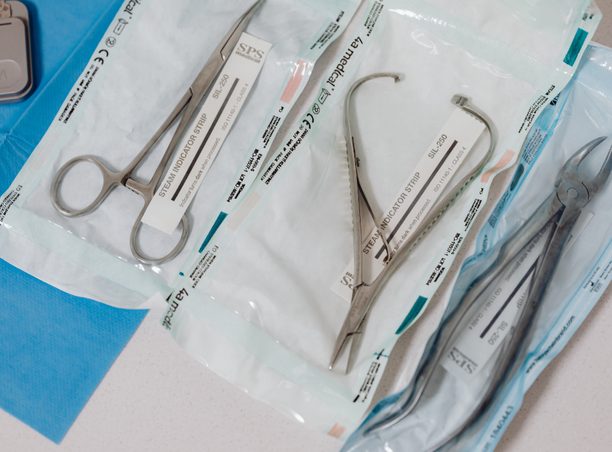
In oral surgery, the difference between a correct intervention and one done in a hurry is seen in time: in how quickly you heal, in how much bone you have left and in how simple the following treatments are. At Dental Science, surgery is not an isolated service, but the foundation on which the entire treatment plan is built.
Dr. Mihai Ionescu is a Specialist in Dental and Maxillofacial Surgery (SMF), a specialization that offers a advanced surgical training, superior to that of general dental surgery. SMF training covers the entire anatomy of the face and jaws, which allows him to safely manage even difficult cases: wisdom teeth in atypical positions, roots in close relation to the alveolar nerve, extensive bone reconstructions. Every intervention is planned on CBCT tomography, for maximum precision and avoiding sensitive anatomical structures.
Our distinctive advantage is continuity: the surgeon who performs your extraction is the same one who plans and carries out, when necessary, the replacement of the tooth. Extraction, bone preservation, eventual addition and final solution are part of the same plan, thought from the beginning, not from separate stages, to different doctors, with information lost between them.
Our clinic in sector 6 is equipped with modern equipment, used daily: the Biolase Epic X laser for soft tissue surgery and periodontal therapy, the MEDIT i700 intraoral scanner for digital planning, the Zumax microscope for treatments that demand maximum precision and the Castellini autoclave, with rigorous sterilization protocol for each instrument and each intervention.
We are located on Bd. Iuliu Maniu 74-76, in the Lujer area, sector 6, Bucharest, easily accessible by metro or public transport. We offer transparent prices, and each patient receives one detailed estimate before any intervention, with all stages and costs clearly explained.
services
“Excellent dental experience! The team is super attentive and the treatment was painless.”



“Excellent dental experience! The team is super attentive and the treatment was painless.”
Don't put off taking care of your smile. Schedule today and discover modern treatments, planned together with you, for a new, natural and lasting result.