
#ORTHODONTICS FOR CHILDREN AND ADULTS
Braces in Sector 6, Bucharest
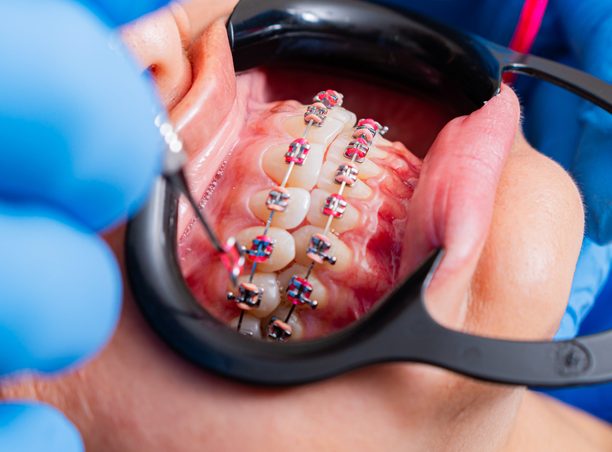
Straight teeth and a healthy bite, at any age
Braces correct the position of your teeth and jaws, giving you a balanced smile and a bite that works the way it should. At Dental Science, in the Lujerului area of Sector 6, Bucharest, orthodontics has been the clinic's core specialty since 2009, for children and adults alike. We work with metal or sapphire fixed braces, Spark clear aligners, and removable or interceptive appliances for children, so every patient gets the solution that fits their case rather than a one-size-fits-all approach.
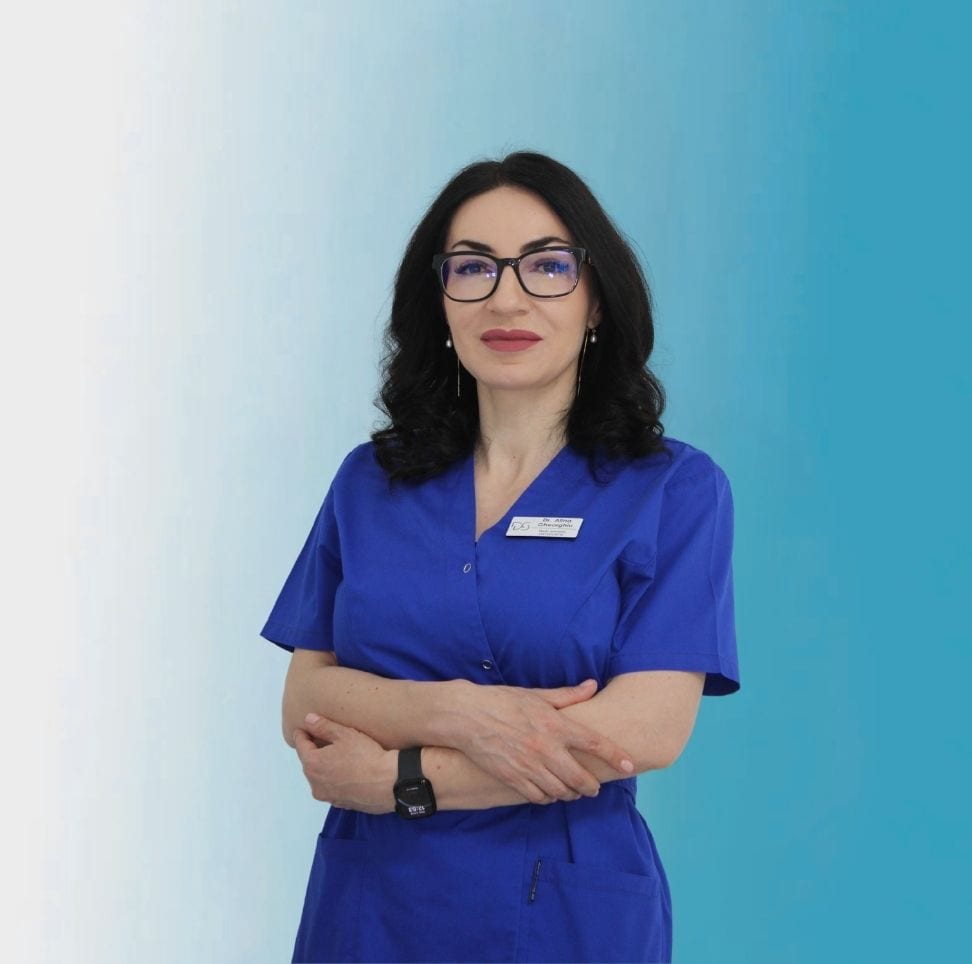
Dr. Alina Gheorghiu, Specialist in Orthodontics and Dentofacial Orthopaedics and founder of the clinic, oversees every orthodontic treatment. She has more than 20 years of experience in dentistry and orthodontics and teaches orthodontic courses for dentists at the start of their careers. Every treatment plan begins with a full assessment and is explained step by step, with prices agreed from the outset.
What to expect

Classic metal or rhodium-coated fixed braces (still metal, but lighter in colour and with smaller brackets, known as Iconix), sapphire braces and Spark aligners
Orthodontic treatment for children, teenagers and adults
3D digital scanning of your dental arches with the MEDIT i700 intraoral scanner
Treatment plan and prices agreed before treatment begins
#what it is
What are braces and what types are there?
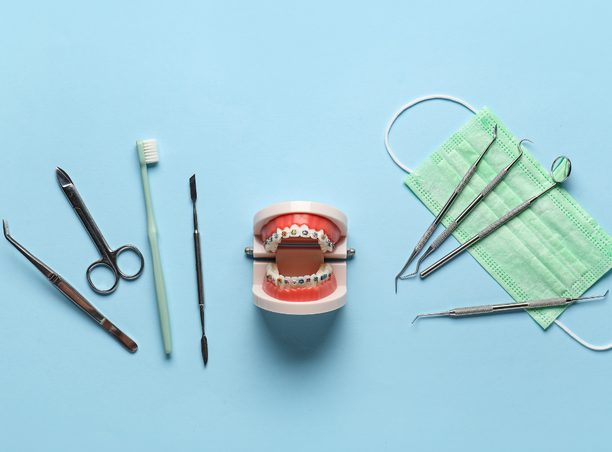
Braces are an orthodontic appliance that applies gentle, controlled forces to the teeth, gradually moving them into the right position. As each tooth moves, the bone around it remodels and the new position stabilises over time. Orthodontics is not only about how your smile looks: a correct bite protects your teeth from wear, cracks and fractures, makes cleaning easier and reduces strain on the jaw muscles and temporomandibular joints.
Orthodontic appliances fall into two broad groups: fixed appliances, bonded to the teeth and adjusted by the orthodontist at check-ups, and removable appliances, which you can take out yourself, such as aligners and removable appliances for children. The choice is not just a matter of looks; it depends on the diagnosis: the type of problem, your age, the health of your gums and how far the teeth need to move.
Types of braces at Dental Science
Metal fixed braces: the classic option, with metal brackets bonded to the front of the teeth and connected by an archwire. They have the widest range of use, correcting both simple and complex cases, including difficult tooth movements. They are also the most affordable of the fixed options.
Rhodium-coated metal braces (Iconix): metal brackets with a rhodium coating, a matte finish and a lighter tone, smaller and far less noticeable than shiny metal. They keep all the effectiveness of metal braces with a more pleasing look, and suit patients who want a balance between discretion and cost.
Sapphire fixed braces: clear sapphire brackets that let the natural colour of your teeth show through. Sapphire is transparent rather than tooth-coloured, and it is a popular choice for adults and teenagers who don't want their braces to draw attention.
Spark clear aligners: clear, removable trays replaced in sequence, with no brackets and no wires. You take them out to eat and to brush, and the whole treatment is planned digitally. It is important to wear them for around 22 hours a day. You'll find all the details on our dedicated clear aligners page.
Removable braces: used mainly in children during growth, to guide jaw development and the eruption of the teeth. They come out for cleaning and must be worn exactly as the orthodontist advises to work (roughly 16-17 hours a day).
Interceptive appliances for children: the palatal expander (an appliance fixed to the roof of the mouth that widens a narrow upper jaw), the space maintainer (which holds the gap left by a baby tooth lost too early, so the permanent tooth can come through correctly) and the Delaire face mask (used in children to encourage growth of the upper jaw when there is a reverse bite). Where treatment needs extra anchorage, the plan may also include orthodontic mini-implants.
Fixed braces or aligners? A quick comparison
Fixed braces (metal, Iconix or sapphire): fully controlled by the orthodontist, effective even in complex cases and not dependent on how consistently you wear them. They call for extra care with oral hygiene and a few changes to your diet, with check-ups every month.
Spark aligners: almost invisible and removable, with no food restrictions and easy hygiene. They are best suited to mild and moderate cases, but they only work if you wear them for at least 22 hours a day.
In short: fixed braces give full control and suit any case, while aligners offer discretion and comfort, provided you are disciplined about wearing them. The final recommendation comes from the orthodontist, after diagnosis.


How does treatment with braces work at Dental Science?
Orthodontic treatment follows a clear protocol, from the first consultation through to the retention phase. Here are the stages every patient goes through:
1. The orthodontic consultation
It all starts at our clinic in the Lujerului area, Sector 6, Bucharest. Dr. Alina Gheorghiu examines your teeth, bite and facial profile, talks with you (or with the parents, for children) about what bothers you and what you expect from treatment, then explains the options that suit your case.
2. Diagnostic records
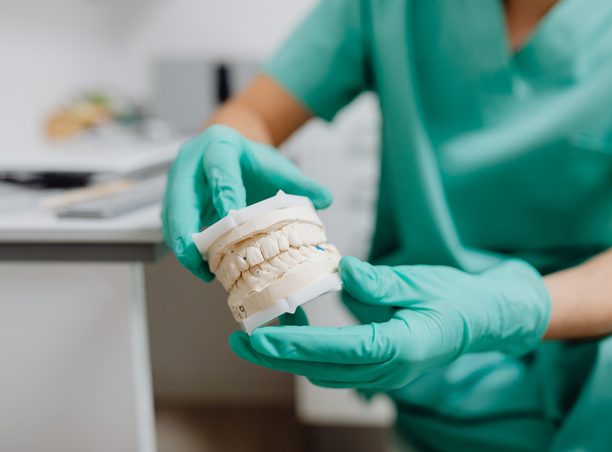
An accurate plan needs X-rays and a precise record of your dental arches. This is done with a 3D digital scan using the MEDIT i700 intraoral scanner, which is quick and comfortable, or with traditional dental impressions and study models, depending on the case.
3. The treatment plan
Based on these records, you receive the full plan: which appliance is recommended and why, the estimated duration, the stages and the costs. The type of braces is chosen together with you, within the limits the diagnosis allows.
4. Fitting the braces
With fixed braces, the brackets are bonded to the teeth in a dedicated appointment, with no anaesthetic and no pain. For the first few days you'll feel some pressure and the sense of something new in your mouth, which gradually fades. You leave with clear instructions on brushing, eating and what to do if you get minor irritation.
5. Regular check-ups
With fixed braces, check-ups and adjustments take place every month: the orthodontist adjusts the archwire, checks progress and, if needed, recommends intraoral elastics to correct the bite. With aligners, check-ups are less frequent, every 8-10 weeks.
6. Removing the braces and the retention phase
At the end, the fixed braces are removed, your teeth are professionally cleaned and a retainer is fitted: either a clear removable retainer tray or a bonded retainer, a thin wire fixed to the inner surface of the front teeth. Retention keeps the result in place; without it, teeth tend to drift back towards their original position.
How long treatment takes depends on the complexity of the case: usually 12 to 24 months for fixed braces and 6 to 24 months for aligners. Interceptive treatment in children is usually shorter. Dr. Alina Gheorghiu will give you the estimated duration as early as the planning stage.
How much do braces cost at Dental Science?
The prices below are taken from the clinic's price list:
- Orthodontic consultation and treatment plan discussion: 250 lei
- Digital scan of both arches and the bite: 300 lei
- Dental impressions and study models: 220 lei
- Metal fixed braces, both arches: EUR 1,350
- Rhodium-coated metal braces (Iconix): EUR 1,550
- Sapphire fixed braces, both arches: EUR 2,250
- Spark aligners: from EUR 1,250 (one arch) up to EUR 4,500 for complex cases
- Removable orthodontic appliance, per arch: 1,800 lei
- Palatal expander: 2,000 lei
- Space maintainer: 680 lei
- Delaire face mask: 2,000 lei
- Orthodontic mini-implant: EUR 180
- Fixed braces fitting appointment, both arches: 440 lei
- Monthly check-up and adjustment of fixed braces, both arches: 250 lei (metal), 280 lei (ceramic or sapphire)
- Retainer tray or bonded retainer: 480 lei
- Removal of fixed braces and final professional cleaning: 440 lei
The total cost of treatment includes the braces, the fitting appointment, the monthly check-ups for the full length of treatment and the retainer at the end. Prices in euro are converted into lei at the National Bank of Romania (BNR) exchange rate on the day. After the consultation and diagnostic records, you receive a detailed quote covering all costs before treatment begins. You'll find the full list on our prices page.
#when
When do you need braces?
Needing braces isn't only about how your smile looks. Dr. Alina Gheorghiu assesses every case clinically and radiologically and tells you clearly whether orthodontic treatment is needed, what it aims to achieve and what happens if you put it off. These are the most common situations:
Crowded or overlapping teeth. When there isn't enough room in the arch, teeth rotate or overlap. Beyond the cosmetic side, crowded areas are hard to clean and make tooth decay and gum inflammation more likely, followed by bone loss.
Gaps between the teeth (diastemas). Visible gaps, especially between the front teeth, can be closed orthodontically without reshaping your natural teeth.
Bite problems (malocclusion). A deep bite, open bite, crossbite, or a lower jaw that sits too far forward or back are not just cosmetic issues. In our practice we have seen a marked rise in dentofacial anomalies and their consequences: changes to facial appearance, muscle and joint pain, cracked, fractured and worn teeth, and worsening gum disease.
Protruding teeth or teeth that have shifted. Front teeth that tilt outwards are more exposed to injury. In adults, teeth can shift over time, including after neighbouring teeth are lost or because of gum disease.
Relapse after previous orthodontic treatment. If you've worn braces before but your teeth have partly moved back towards their original position, usually because the retainer wasn't worn as instructed, they can often be realigned with a shorter course of treatment.
Preparation for implants or restorative work. Sometimes teeth need to be repositioned before an implant or restorative work, to create the right amount of space. This is planned together with the clinic's other specialists.
Braces for children: when is the right time for a first check-up?
A first orthodontic assessment is recommended around the age of 7, even if the teeth look fine. At this age the jaws are still growing, and some problems are easier to correct than they will be later: a narrow upper jaw can be widened with a palatal expander, the gap left by a baby tooth lost too early can be held open with a space maintainer, and certain bite problems can be guided with removable appliances or a Delaire face mask.
Interceptive treatment doesn't always replace fixed braces later on, but it can make them simpler and shorter. Sometimes the outcome of the consultation is that no appliance is needed yet, just monitoring. Signs that it's worth booking a consultation sooner: mouth breathing, thumb sucking after the age of 4-5, baby teeth lost much too early or too late, a bite where the upper teeth close behind the lower ones, or lower teeth that bite into the gum behind the upper front teeth.
Braces for adults: there is no age limit
More and more patients start orthodontic treatment in their 30s, 40s or even 50s. Teeth can be moved at any age, on one essential condition: the gums and supporting bone must be healthy. That's why, in adults, we first assess gum health, and if there is active gum disease, Dr. Ligia Amza, our Periodontology Specialist, treats it before the braces are fitted. For adults who want discreet treatment, the most popular options are sapphire braces or Spark aligners.
Frequently asked questions about braces
Having fixed braces fitted doesn't hurt and doesn't require an anaesthetic. For the first few days after fitting, and after each adjustment, you may feel some pressure or tenderness when chewing, which usually passes within 2 to 4 days. The discomfort is easy to manage, and most patients get used to their braces quickly.
Usually 12 to 24 months for fixed braces, depending on how complex the case is, your age and how closely you follow the instructions. Once the braces come off, the retention phase begins, with a retainer worn long term to maintain the result.
A first orthodontic assessment is recommended around the age of 7. Fixed braces can be fitted once the 4 upper and 4 lower incisors and the first permanent molars (the 6-year molars) have come through. For adults there is no upper age limit, as long as the gums and bone are healthy.
Spark aligners are almost invisible and removable. Among fixed braces, sapphire brackets are transparent, while Iconix rhodium-coated braces have a matte finish that is more discreet than classic metal. The choice also depends on the diagnosis, not just on appearance.
You can eat almost anything, with a few precautions: avoid very hard foods (whole nuts, hard sweets), sticky foods (toffee, chewing gum) and biting straight into hard fruit such as apples, which are better cut into pieces. This helps prevent brackets from coming loose or the archwire from bending.
Brush after every meal with a medium toothbrush, and use interdental brushes or a water flosser for the area under the wire. Careful cleaning prevents white spots on the enamel and gum inflammation. We'll show you the right technique at the start of treatment, and regular professional cleanings complement your care at home.
Intraoral elastics are hooked between the upper and lower arches and correct how the jaws meet, in other words your bite. Not every patient needs them, and how well they work depends on wearing them every day, exactly as your orthodontist recommends.
For irritation on your cheeks or lips, apply orthodontic wax to the area that bothers you until the soft tissues adapt. If part of the braces comes loose or the wire is poking you, call us and we'll book a repair appointment. Don't try to fix the braces yourself.
Retention keeps your teeth in their new position once active treatment is over. The retainer can be a clear removable tray or a bonded retainer fixed to the inner surface of the front teeth. It is worn long term, as your orthodontist advises, because teeth naturally tend to drift back towards their original position.
At Dental Science, metal fixed braces for both arches cost EUR 1,350, Iconix rhodium-coated braces EUR 1,550, and sapphire braces for both arches EUR 2,250. Spark aligners start at EUR 1,250 for one arch and go up to EUR 4,500 for complex cases. On top of this come the consultation, diagnostic records, fitting, monthly check-ups and retainer. You'll get the exact cost in the quote you receive after your consultation.
Whether it's your child's first orthodontic check-up or the braces you've been putting off for years, the first step is a clear assessment. We look forward to seeing you at Dental Science in Sector 6, Bucharest: Dr. Alina Gheorghiu will explain which type of braces suits your case, how long treatment takes and how much it costs, before you make any decision.
Book your appointment at Dental Science, Sector 6, Bucharest. Phone: 0744.490.624
#why us
Why choose Dental Science for braces in Sector 6?
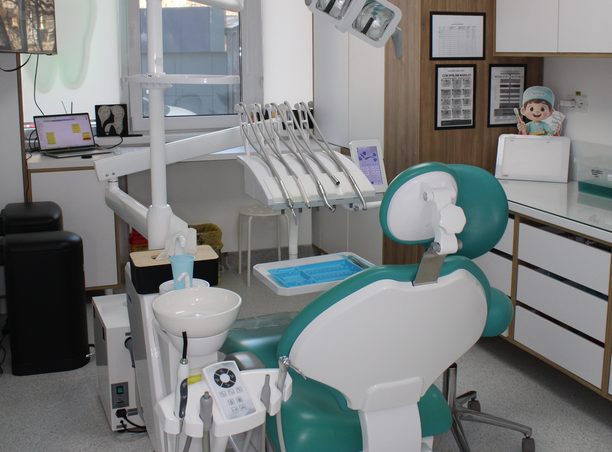
Orthodontics is the specialty Dental Science was built around. The clinic was founded in 2009 by an orthodontist, and since then we have treated children, teenagers and adults from Sector 6, Militari, the Gorjului area and all over Bucharest.
Dr. Alina Gheorghiu is a Specialist in Orthodontics and Dentofacial Orthopaedics with more than 20 years of experience. Alongside her clinical work, she teaches orthodontic courses for dentists in partnership with Optimutil. Her ongoing training includes the orthodontic biomechanics course (TADs, asymmetries, troubleshooting and finishing) with Susana Palma Education, the Master COIP 2025 programme and the Spark Clear Aligners, Spark Discovery and Spark Discovery Plus certifications from Ormco.
The advantage of a clinic that works with every type of braces is an honest recommendation: we don't offer the same appliance for every case, but the one your situation actually needs. For a child that might be a palatal expander followed by monitoring, for a teenager metal fixed braces, and for an adult who wants discretion, sapphire braces or Spark aligners.
Our approach is interdisciplinary: before treatment we check the health of your gums, and if you need gum treatment, root canal treatment or extractions, these are carried out in the same clinic, coordinated with your orthodontic plan. We use the MEDIT i700 intraoral scanner to record your dental arches digitally and the Biolase Epic X laser for periodontal treatment.
You'll find us at Bd. Iuliu Maniu 74-76, in the Lujerului area of Sector 6, Bucharest, close to Lujerului metro station. Orthodontic treatment involves monthly check-ups, so having a clinic close to your home, office or your child's school really matters. We offer transparent prices, and every patient receives a detailed quote before treatment begins.
services
“Excellent dental experience! The team is super attentive and the treatment was painless.”


“Excellent dental experience! The team is super attentive and the treatment was painless.”
Don't put off taking care of your smile. Schedule today and discover modern treatments, planned together with you, for a new, natural and lasting result.